
Know More About Ecuador Freedom Bike Rental
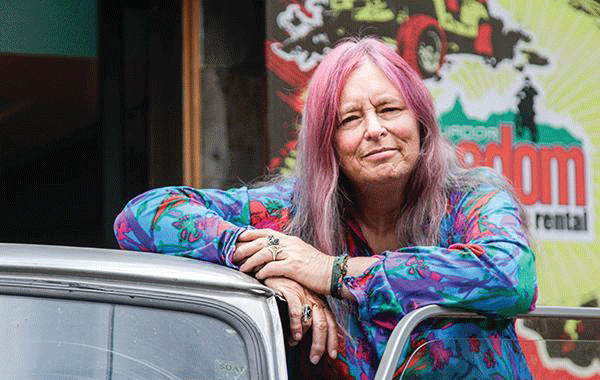
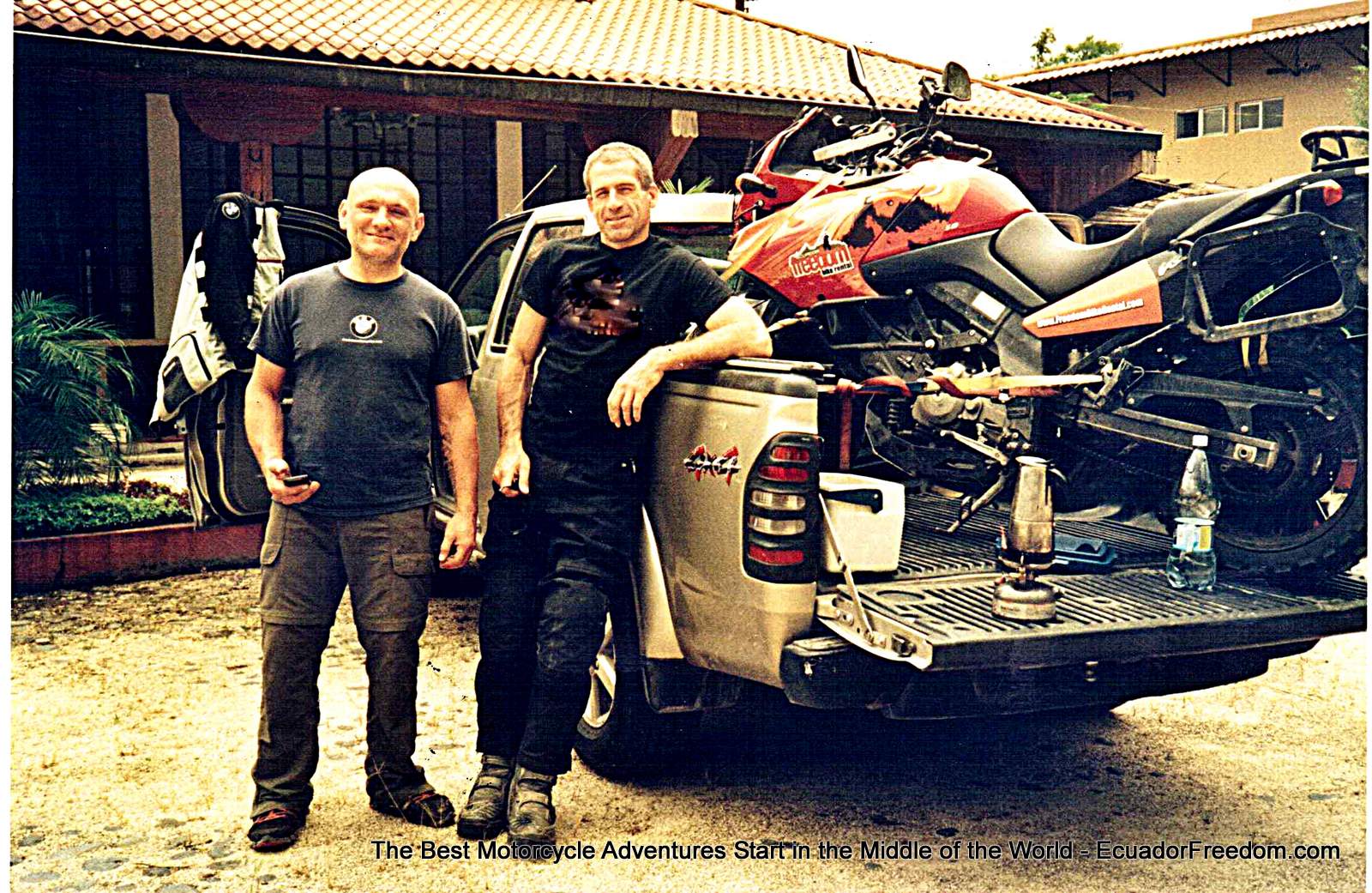
Court Rand and Sylvain Gallea know a thing or two about adventure. Having met in 1990 while Court worked as a motorcycle courier in Paris, the two later hit the road in 2008 on a protracted motorcycle tour of the Americas. Departing New York City, where Court worked as the director of a software company and Sylvain as an electrician, their southbound route took them through Mexico, Belize, Guatemala, El Salvador, Honduras, Nicaragua, Costa Rica, Panama, Colombia, Ecuador, Bolivia, Chile, and terminated in Buenos Aires, Argentina. More than just a crazy adventure, it was an affirmation of what motorcycles and open roads represent - a sense of liberation. They found themselves with a new sense of purpose that revolved around providing people the opportunity to fully experience life.
"We were just two long-distance motorcycle adventurers wanting to share the feeling of freedom we felt on the road when we started Ecuador Freedom Bike Rental in 2009. At the time, Ecuador was not well-known by motorcyclists and where most transcontinental adventure riders zoomed through on their way to Alaska or Ushuaia. Over time, we've singlehandedly turned Ecuador into a top adventure-riding destination in South America. We will continue to do so as we welcome more and more riders from around the world. While other multinational tour companies have discovered Ecuador and struggle to offer tours here, we remain focused. We concentrate on providing the best possible experience here as a small, boutique, local operator." they will tell you.
In 2009 Court and Sylvain, ex-pats from the United States and France launched Ecuador Freedom Bike Rental. Starting with one humble shop, it didn't take long before Ecuador Freedom Bike Rental became Ecuador's foremost adventure motorcycle touring company. They've increased their fleet of bikes since opening and employed more members staff-wise - all dedicated to giving riders an unforgettable experience tailored specifically to them. It helped that Sylvain had been a bartender prior while Court was an Outward Bound Instructor working mainly with children struggling through school or family life, but what truly sets them apart is how deeply they care about those who have come to love the land on which they live so dearly. Since opening its doors, Ecuador Freedom Bike Rental has become the preeminent adventure motorcycle touring company in Ecuador and South America. They have added more motorcycles, and additional employees, and built a headquarters that handles motorcycle maintenance. Their continued success results from their unwavering commitment to their guests and adopted community.
Central to their company mission is a dedication to the people of Ecuador by giving back whenever they can. They’ve come a long way since first hitting the road on their big adventure over a fourteen years ago. Perhaps their most impressive accomplishment is proving everyone is deserving of the trip of a lifetime. Everyone needs––Freedom.
The True Ecuador Freedom Bike Rental: Don't Be Fooled by Pretenders and False Advertising
Ecuador Freedom Bike Rental is an award-winning motorcycle and 4x4 rental and tour company focused on bespoke guided and self-guided tours and extraordinary travel experiences in Ecuador. We have a robust fleet of well-equipped adventure motorcycles and 4x4s, extensive knowledge of Ecuador’s most spectacular routes and wonders of nature, and deep connections with local communities. We carefully design our tours to showcase Ecuador’s hidden treasures and places off the beaten path. Our experienced staff are excellent in providing guidance and support for travelers, and our Quito headquarters are a hub of adventure. We have millions of Ecuadorian tarmac and dirt miles under our belts, and hundreds of returning customers each year confirm we must be doing something right.
But it took us more than a decade to get here.
Back in 2009, we started out as a small bicycle and scooter rental shop in Cuenca with just a few bikes and a big idea. It took us years to truly get to know Ecuador, understand the needs of travelers, establish meaningful connections with the locals, and appreciate the unique and beautiful diversity of this little South American gem. It took trial and error, vision, and determination; as we moved to Quito and slowly expanded and perfected our motorcycle fleet, our routes, and our tour options, we faced more than our fair share of challenges along the way.
As we went along, we didn’t just focus on the business; we focused on the rider community, because at the core of things, that’s what matters most. We continuously sponsor content on ADV Rider and other adventure motorcycle magazines, support events like the BMW MOA and Adventure Bike Rider Festival, and our doors are always open to independent world travelers passing through Ecuador. Equally, appreciating the Ecuadorian hospitality we’ve experienced from day one, we want to give back to the locals; this is why we’ve created our Pack for a Purpose program supporting Ecuadorian schools and remote communities in need.
In other words, building Ecuador Freedom Bike Rental took years, hard work, and consistent focus on quality, meaningful connections, and a vision for truly extraordinary adventures.
But we’re not sharing this story with you for bragging rights or marketing purposes: we’re sharing it because recently, we’ve noticed another tour operator mimicking our brand and using our name to cash in on the reputation we’ve built, and we’d like to ask for your support.
Healthy Competition vs False Advertising
Don’t get us wrong, here at Ecuador Freedom, we welcome healthy competition: after all, that’s what keeps everyone growing and improving. In addition, we strongly believe in collaboration – that way, everyone wins, especially the riders choosing Ecuador for their next adventure.
What we’re not OK with, however, is other tour operators blatantly copying our brand name and purposely confusing people. An relatively inexperienced motorcycle rental and tour company Sleipner is doing exactly this: calling themselves "Ecuador Bike Rental," using similar imagery and color schemes on their website, and going as far as running Google ads with “Ecuador Freedom Bike Rental” keywords in them, the owners of Sleipner are clearly trying to confuse adventure travelers into believing they are us. Imagine our disappointment when, after years of investing and supporting the ADV community globally, riders know us and trust us from meeting us at events or rallies but, thanks to false advertising by Sleipner, book tours with them believing they’re us. Just like that, all our hard work, our reputation, and our efforts are undone by an impostor.
We have reached out to Sleipner asking to stop the false advertising and purposeful misdirection. Unfortunately, they continue to do so and profit from the confusion.
Now, we’re not claiming Sleipner isn’t a competent tour operator, and we certainly don’t take it upon ourselves to tell others how to run their business. Everyone is different (or should be), and we all have our unique place under the sun.
We are, however, asking people to double-check before booking. If you choose to rent a bike or go on a tour with our competitors, that’s absolutely your right and your prerogative, but often, we notice people booking with Sleipner solely because they believe Sleipner is Ecuador Freedom Bike Rental. We ask you to verify before booking, and we encourage you not to be fooled by pretenders and false advertising – it benefits no one, and it hurts both Ecuador Freedom Bike Rental and riders expecting to have an Ecuador Freedom experience.
It's a little like if a generic soda drink company called themselves Cola-Cola, used similar brand colors and fonts, and actively advertised as Coca-Cola. If people wanted to have that particular Cola-Cola soda drink and bought it as such, there’s absolutely no problem: everyone has a different taste. But if people were purposefully misled and bought the generic soda thinking they were getting original Coca-Cola, surely, that would be wrong.
And that’s exactly our issue with Sleipner. We wish them all the best in their business and we welcome the competition. However, we’re asking them to stop the false advertising campaign – and we’re asking you, adventure riders and travelers, to be mindful of the confusion caused by it.
Thank you, and see you in Quito - where adventure begins.
Focused on Ecuador.
We've been designing and organizing tours in Ecuador since 2009, meeting people and building our wealth of knowledge of the country. When you travel with us, you will meet incredible people and visit places you never would have seen on your own. You'll be surrounded by people who are rich in knowledge and insights about the places we go. You’re enriched by the knowledge of our staff, resources, guides, and by the local people you will meet along the way. From the guides and riders who lead our trips to the local guides and artisans we meet in the field, you’ll be surrounded by people who are steeped in knowledge and insights about the places we go. And they’re passionate about sharing that knowledge with you.
Safety: Our Priority
Safety and security are about being aware of your surroundings, clear communication, and being prepared. Our equipment is provided by leading international manufacturers, purchased new and maintained that way by a team of professionals. We don't cut corners on tires, brakes or any equipment and we inspect and secure everything with North American and European standards. We follow MSF guidelines with regards to group riding, and our tours are equipped with satellite communication systems in case of an emergency. Our entire staff has been trained in emergency scene management, first aid and CPR as well as motorcycle mechanics and maintenance. We learned after the 2016 7.8 earthquake that things can go terribly wrong when you least expect it. No matter all the preparation and safe riding, things can happen, and if so, you want to know what to do. We want to make sure that in case of an emergency, we can react and know what to do. A crisis is not a time to freeze up. Knowing first aid and CPR takes away the doubts of and saves precious seconds in an emergency.
Giving Back
We Provide Adventure.
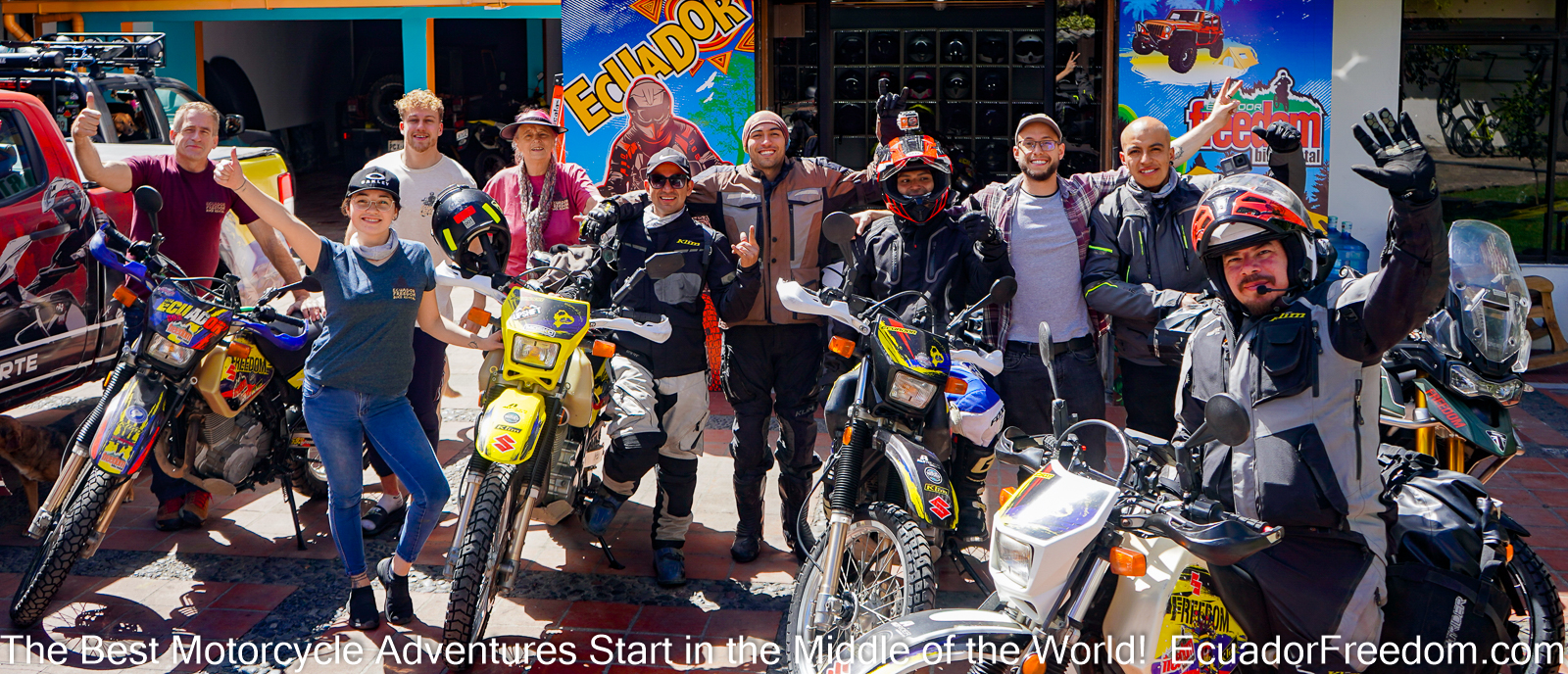
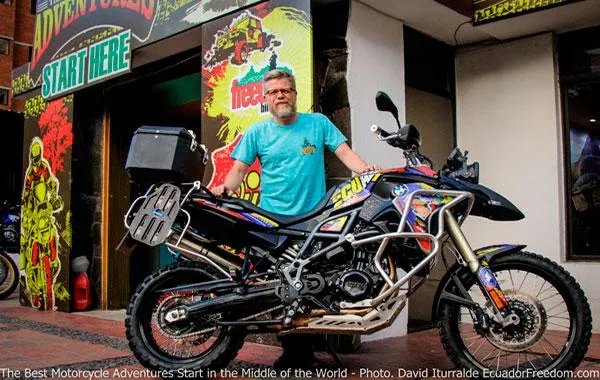
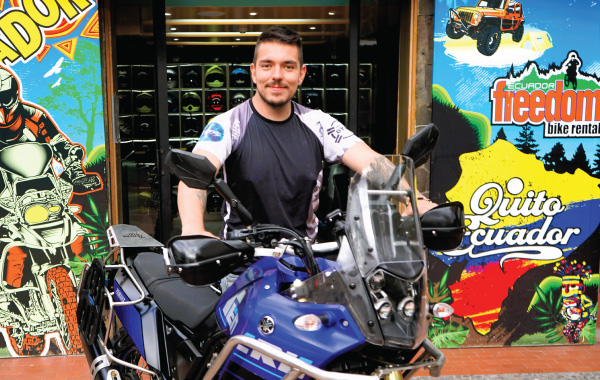
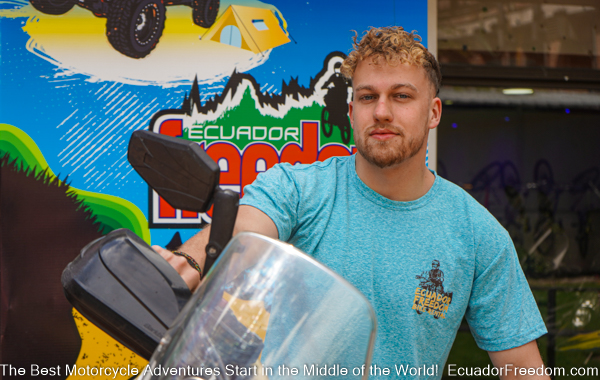
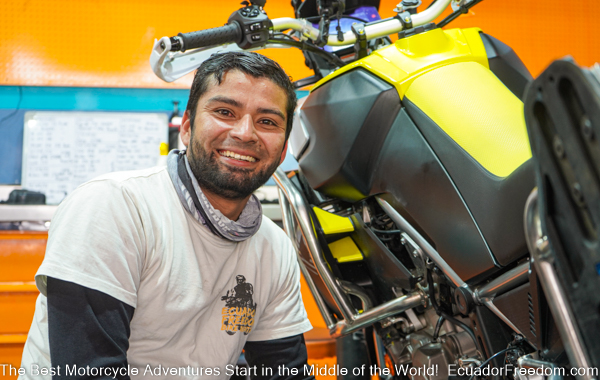
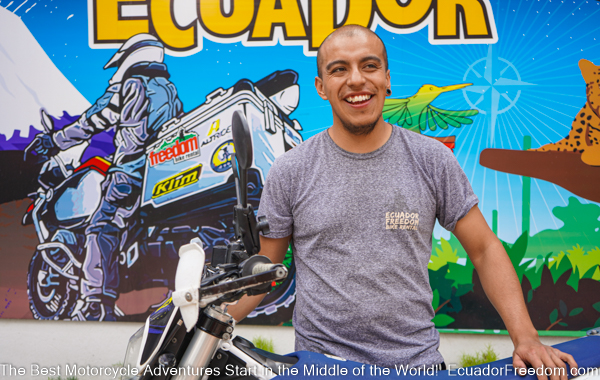
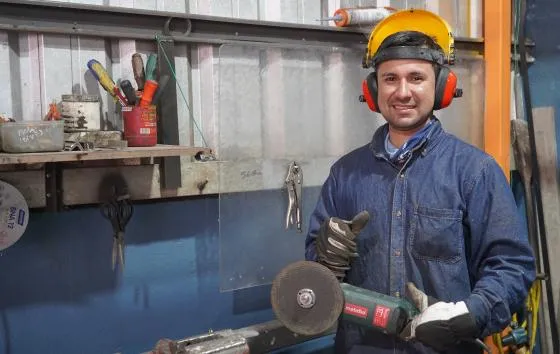
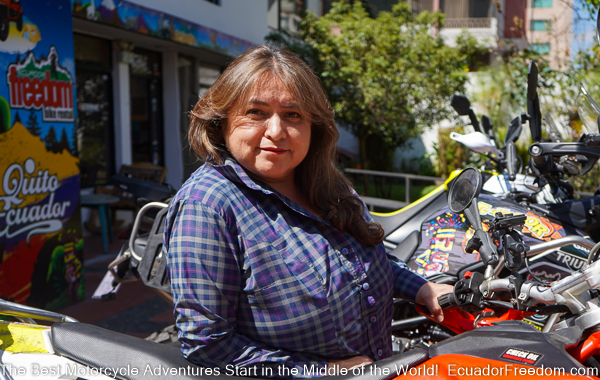
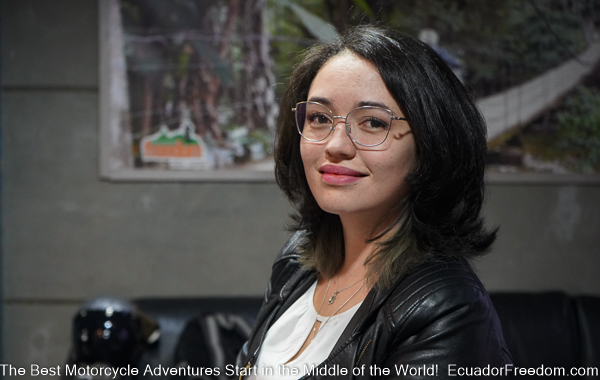
The Extraordinary Team Behind the Handlebars: Ecuador Freedom Bike Rental's Employees
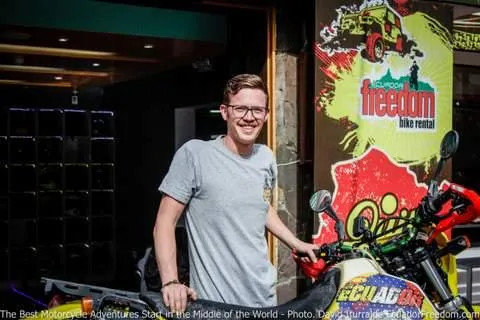
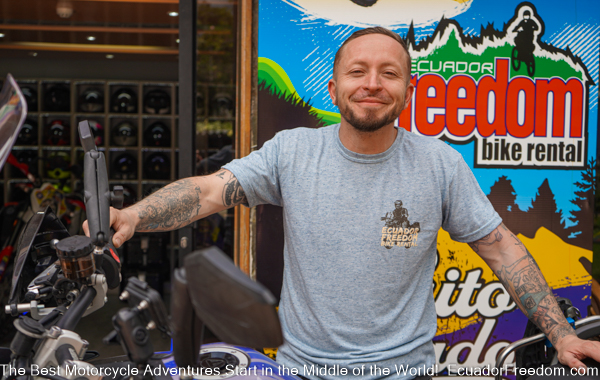
Meet Our Adventurous Team: